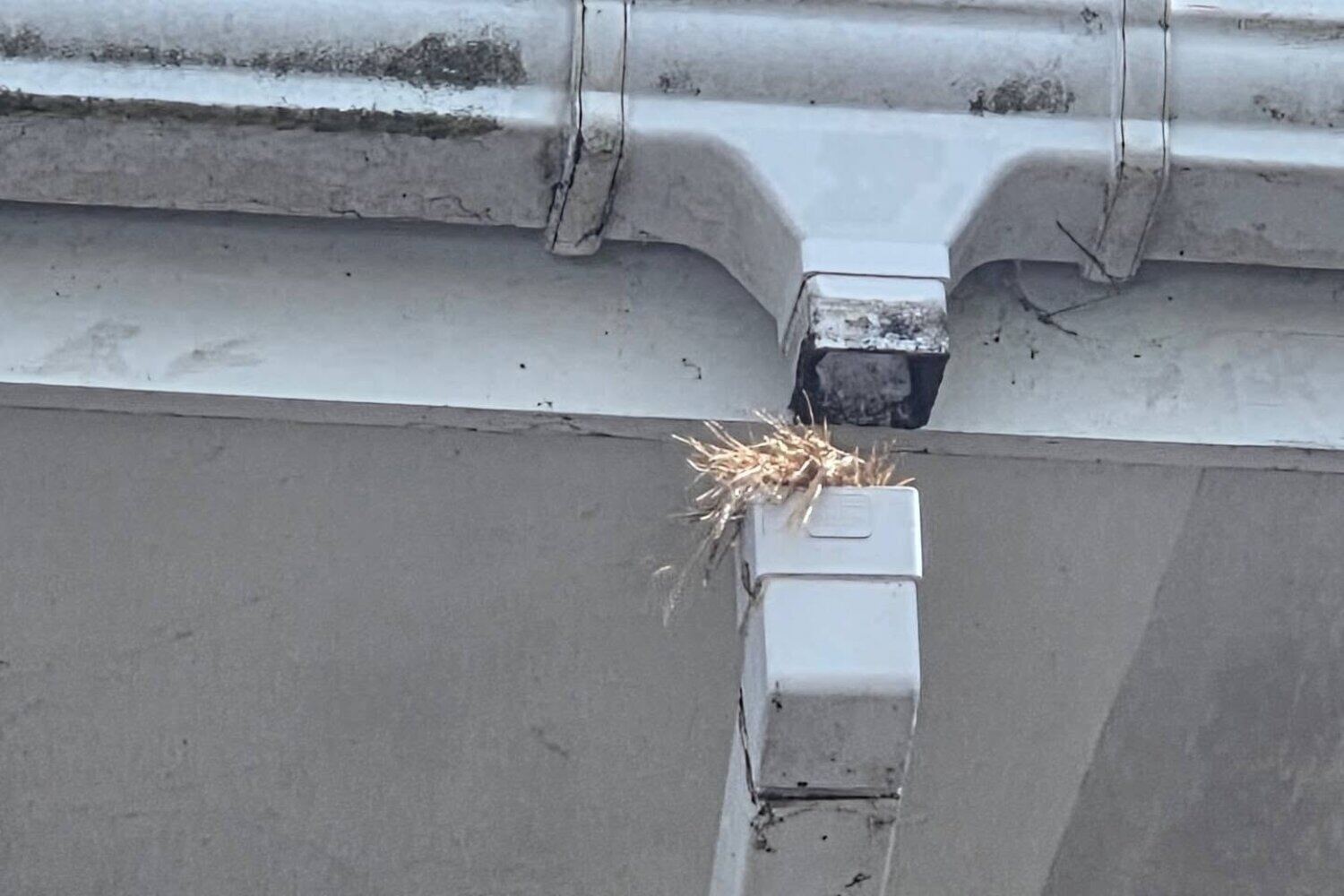
Cleaning solves a clog. It does not solve a gutter that is pitched the wrong way, hanging off rotted fascia or leaking at every joint. If any of the following describe your house, another clean-out is not going to help.
1. Water Stands in the Trough Between Storms
A correctly hung gutter drains completely. If there is standing water in a clean gutter, the run has lost its pitch — usually because the weight of wet debris pulled the middle down over a season or two. Standing water breeds mosquitoes, accelerates corrosion and adds weight that makes the sag worse.
2. Gaps Between the Gutter and the Fascia
You should not be able to see daylight behind the gutter. A gap means the hangers have pulled, and water running down the back of the trough is soaking the fascia board directly. This is how a gutter problem turns into a carpentry problem.
3. Drips at the Corners
Inside and outside miters are sealed joints, and sealant has a service life. When it fails, water runs down the corner of the house rather than through the downspout. The fix is straightforward — cut out the old sealant, clean back to bare metal, re-tool — but it will not fix itself.
4. Peeling Paint or Stained Siding Below the Gutter Line
Vertical stripes of dirt or blistered paint under the gutter mean water is going over the edge regularly. If that is happening on a gutter you know is clean, the trough is undersized or the outlet is too small for the volume.
5. A Downspout That Trickles in a Storm
During real rain a downspout should be moving serious water. A trickle means there is a blockage below the outlet, often at the first elbow or in a buried drain line. Water backing up above a blockage will find the nearest seam and leak there.
6. Pooling Water Against the Foundation
Look at the ground under each downspout after a storm. Standing water within a few feet of the wall means the discharge is not being carried far enough away. Extensions and proper splash blocks cost very little compared to what saturated soil does to a foundation over years.
7. Rust Streaks or Splits
On older steel gutters, rust streaks on the outside face mean the inside is worse. A patch buys time, but the metal around the patch is on the same clock. This is the point where replacement is the honest recommendation.
Which of These Are Urgent
Gaps behind the gutter and pooling at the foundation should be dealt with before the next wet season — both cause damage to structure rather than to the gutter itself. Standing water, failed miters and trickling downspouts are worth fixing soon but will not cause structural harm in a few months. Rust streaks mean it is time to start planning a replacement rather than reacting to one.