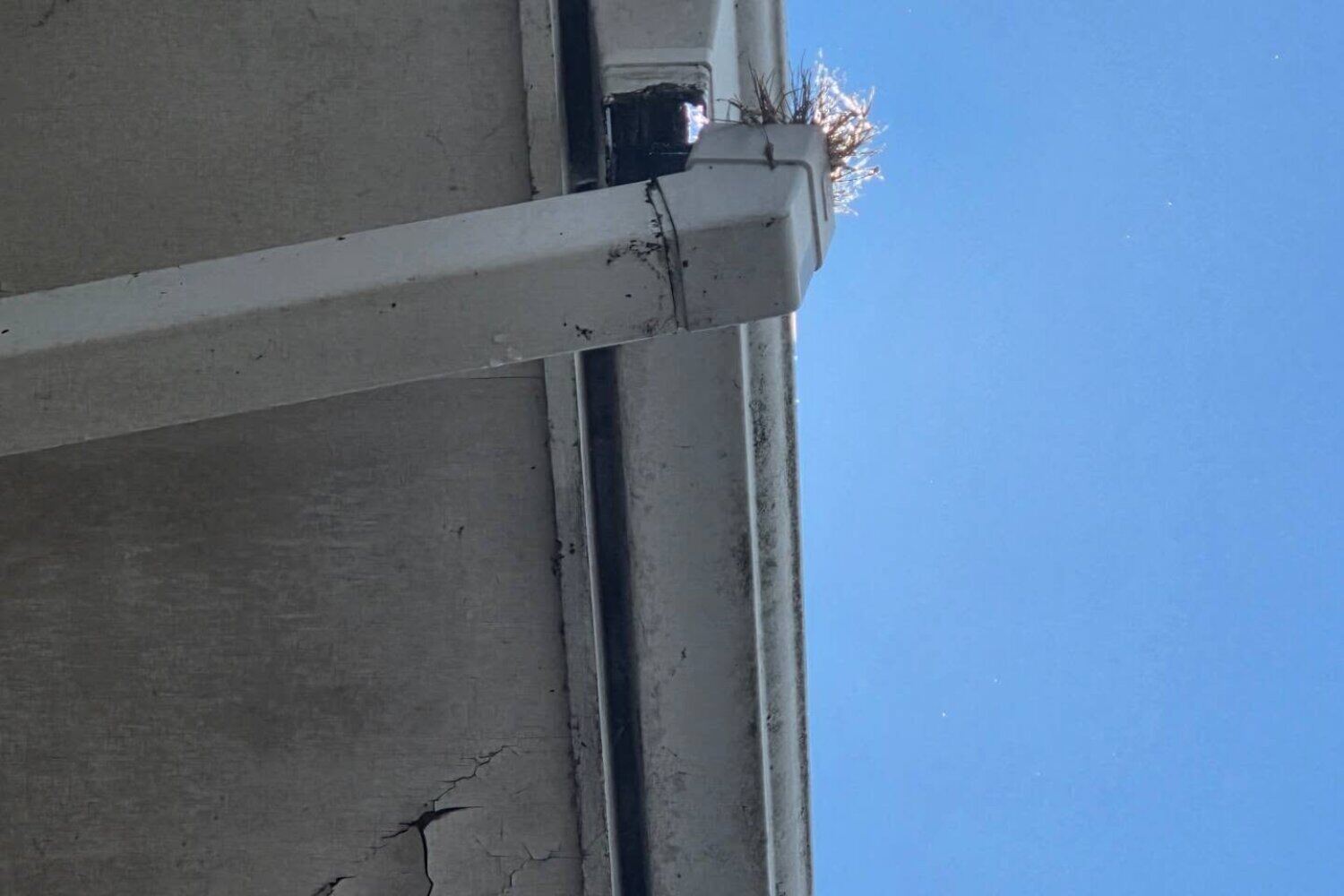
A gutter system has one purpose: get roof water away from the building. Most of the attention goes to the trough, but the part that actually protects your foundation is what happens after the water leaves the downspout.
The Volume Is Larger Than People Expect
An inch of rain on a 1,500 square foot roof is roughly 900 gallons of water. In a Salem winter storm that arrives over a few hours, and it all exits through three or four downspouts. If those discharge next to the wall, you are pouring hundreds of gallons into the soil against your foundation, repeatedly, all winter.
What That Does Over Time
Saturated soil against a foundation exerts lateral pressure on the wall. In this valley, where a lot of soil has significant clay content, that soil also swells when wet and shrinks when dry — a cycle that works away at concrete and mortar. Crawl spaces stay damp, basements weep at the cold joint, and mould follows.
None of it happens quickly, which is exactly why it gets ignored. The damage from bad downspout discharge shows up years after the cause.
How Far Is Far Enough
Four feet from the wall is the usual minimum, six feet is better, and on a lot that slopes toward the house you may need to run it further or into a buried line. The discharge point also has to be lower than the foundation — an extension that ends in a low spot beside the house has moved the puddle a few feet, not solved it.
The Options, Cheapest First
- Downspout extensions: a length of matching material clipped to the existing elbow. Cheap, effective, and easy to knock loose with a lawnmower.
- Roll-out or hinged extensions: fold up for mowing, drop down the rest of the time. A good compromise on tight side yards.
- Splash blocks: fine for spreading flow on a well-graded lot, useless as the only measure on a flat one.
- Buried drain lines: solid PVC to a daylight point or a dry well. The proper solution, and the one that needs periodic flushing to stay clear.
Buried Lines Need Maintenance Too
A buried drain line is out of sight, which means nobody thinks about it until it backs up. Silt and fine grit settle over years and eventually plug the run — usually at a bend. If a downspout that used to drain freely now overflows at the top in every storm and the gutter above it is clean, the buried line is the first place to look.
We snake and flush buried lines as part of our repair work, and camera-check them when a blockage keeps returning. It is unglamorous work that prevents very expensive problems.